Kaj pomeni donosnost naložbe (ROI) za podjetje s CNC ali laserskim obdelovalnim strojem?
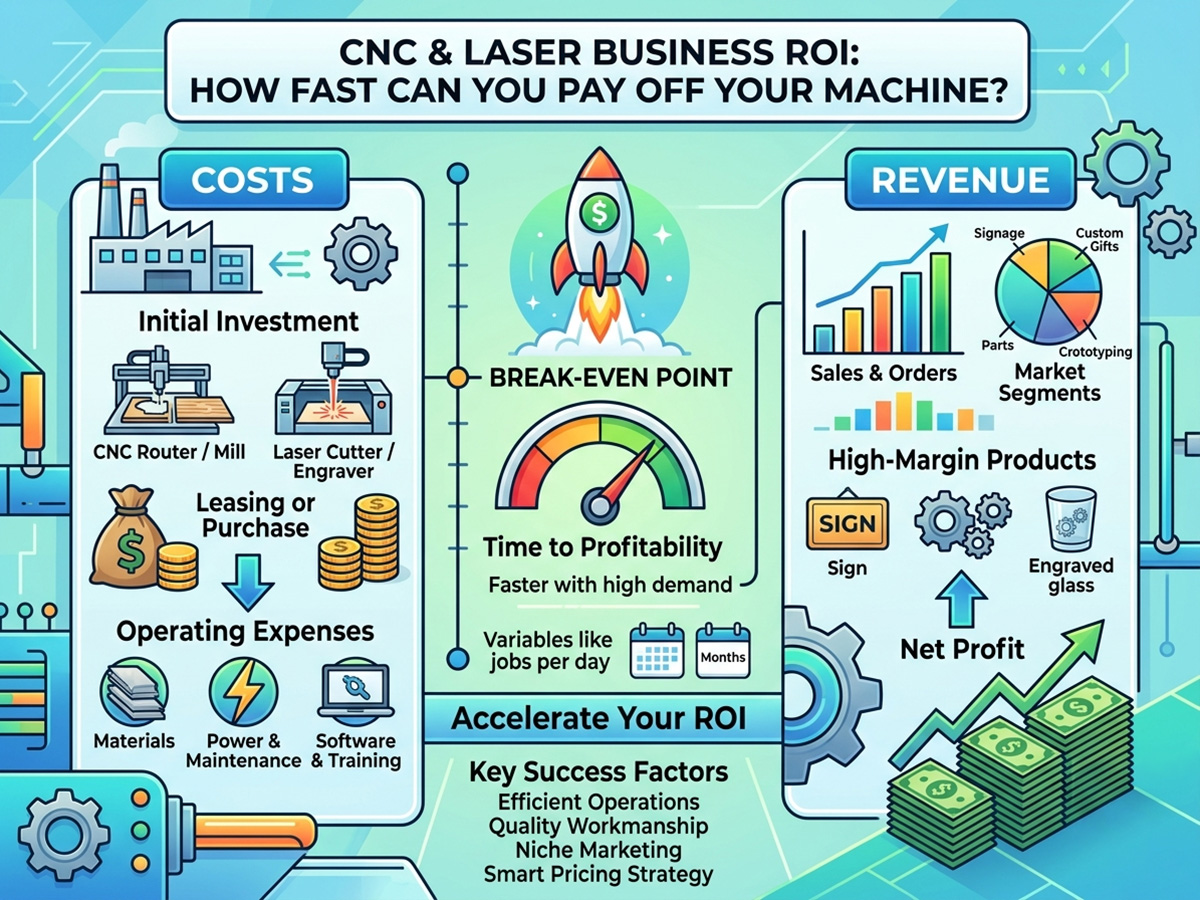
Donosnost naložbe (ROI) za CNC in lasersko opremo meri skupno neto finančno korist, ki jo ustvari vaš stroj, deljeno s skupnimi stroški lastništva in delovanja. Za razliko od splošne poslovne donosnosti naložbe donosnost naložbe na ravni stroja upošteva izpodrivanje delovne sile, zmanjšanje odpadkov materiala, povečano proizvodno zmogljivost in možnost sklepanja pogodb z višjo maržo, ki jih ročne metode ne morejo podpreti.
Pozitivna in hitro rastoča donosnost naložbe pomeni, da vaša oprema prekaša starejše, počasnejše ali ročne procese. Za lastnike delavnic, ki ocenjujejo CNC usmerjevalnik or CNC laserski stroj, izračun donosnosti naložbe zagotavlja najjasnejšo pot od kapitalskega tveganja do finančnega dobička.
Formula za donosnost naložbe: (letni čisti dobiček iz stroja - letni obratovalni stroški) / skupni investicijski stroški x 100.
Tipične dobe vračila glede na vrsto stroja
Dobe odplačila se razlikujejo glede na kategorijo stroja, ceno in kako agresivno lastnik zasleduje prihodke. Spodnja tabela povzema realistične časovnice, pridobljene iz podatkov proizvajalcev in poročil lastnikov delavnic na forumih in v industrijskih anketah.
| Vrsta stroja | Investicijski obseg | Tipična povračilna vrednost | Mesečni potencial dobička | Ciljna uporaba |
|---|---|---|---|---|
| Namizni CNC rezkalnik | 2,000 $- $8, 000 | 3 - 8 mesecev | 500 $- $2, 000 | 40 - 60% |
| CNC usmerjevalnik polne velikosti (4x8) | 15,000 $- $60,000 | 8 - 18 mesecev | 2,000 $- $8, 000 | 60 - 80% |
| CO2 Laserski graver | 2,000 $- $15,000 | 4 - 12 mesecev | 1,000 $- $5, 000 | 50 - 70% |
| Fiber Laser Cutter | 30,000 $- $200,000 | 6 - 24 mesecev | 5,000 $- $15,000 + | 70 - 85% |
| CNC plazemski rezalnik | 8,000 $- $50,000 | 6 - 18 mesecev | 2,000 $- $7, 000 | 55 - 75% |
| Merjenje | $(približno) | Mesecev | USD/mesec | Ure delovanja žarka (%) |
Lastniki delavnic na WOODWEB in Practical Machinist dosledno poročajo, da se dobro uporabljeni CNC rezkalniki povrnejo v prvem letu. Ena delavnica z mizarskimi izdelki je investirala $1Vlaganje v usmerjevalnik in programsko opremo je v 12 mesecih povrnilo celotne stroške z odpravo dveh delovnih mest in podvojitvijo proizvodnje.
Ključni dejavniki, ki pospešijo ali odložijo vašo odplačilo
Dejavniki, ki pospešijo donosnost naložbe
• Visoka stopnja izkoriščenosti: Delovanje vašega stroja pri 60% ali več časa vklopljenega žarka drastično skrajša povračilo. Vsak 10% izkoriščenost lahko skrajša okrevanje za približno 30%.
• Ponavljajoča se proizvodna dela: Napisi po meri, deli omar in gravirani izdelki s predvidljivim povpraševanjem ustvarjajo stalen prihodek, ki podpira mesečna plačila.
• Cenovna disciplina: Zaračunavanje na podlagi dostavljene vrednosti in ne porabljenega časa ščiti marže. Podcenjevanje je najpogostejši dejavnik, ki ubija dobičkonosnost med novimi lastniki CNC strojev.
• Vzporedna produktivnost: Medtem ko stroj deluje brez nadzora, operaterji opravljajo montažo, končno obdelavo ali interakcijo s strankami. To učinkovito podvoji proizvodnjo v delavnici.
• Nišna specializacija: Ciljanje na vertikale z velikim povpraševanjem, kot so poročni spominki, korporativne nagrade, arhitekturni kovinski izdelki ali pohištvo po meri, prinaša višje marže kot splošna izdelava.
Dejavniki, ki zavirajo donosnost naložbe
• Nakup več stroja, kot ga potrebujete: Uporabniki forumov na CNCZone in WOODWEB opozarjajo, da prekomerno vlaganje v zmogljivosti, ki jih ne morete zapolniti, vodi do strmih mesečnih plačil brez ustreznih prihodkov.
• Zanemarjanje naložb v programsko opremo: Izkušeni operaterji poudarjajo, da je poraba za kakovostno programsko opremo CAM prav tako pomembna kot sam stroj. Slaba programska oprema omejuje zmogljivosti vaše strojne opreme.
• Razširjene krivulje učenja: Kompleksne operacije, kot so predali z lastovičjim repom ali 3D Reliefno rezbarenje zahteva mesece programskega izpopolnjevanja, preden doseže učinkovite proizvodne hitrosti.
• Izpadi zaradi slabe podpore: Stroji, ki mirujejo zaradi zamud pri dobavi delov ali servisiranja, uničujejo roke za donosnost naložbe. Operaterji na spletni strani Practical Machinist poudarjajo pomen izbire dobaviteljev z odzivno tehnično podporo.
Scenariji donosnosti naložbe v resničnem svetu
Scenarij 1: Majhna mizarska delavnica s CNC usmerjevalnikom
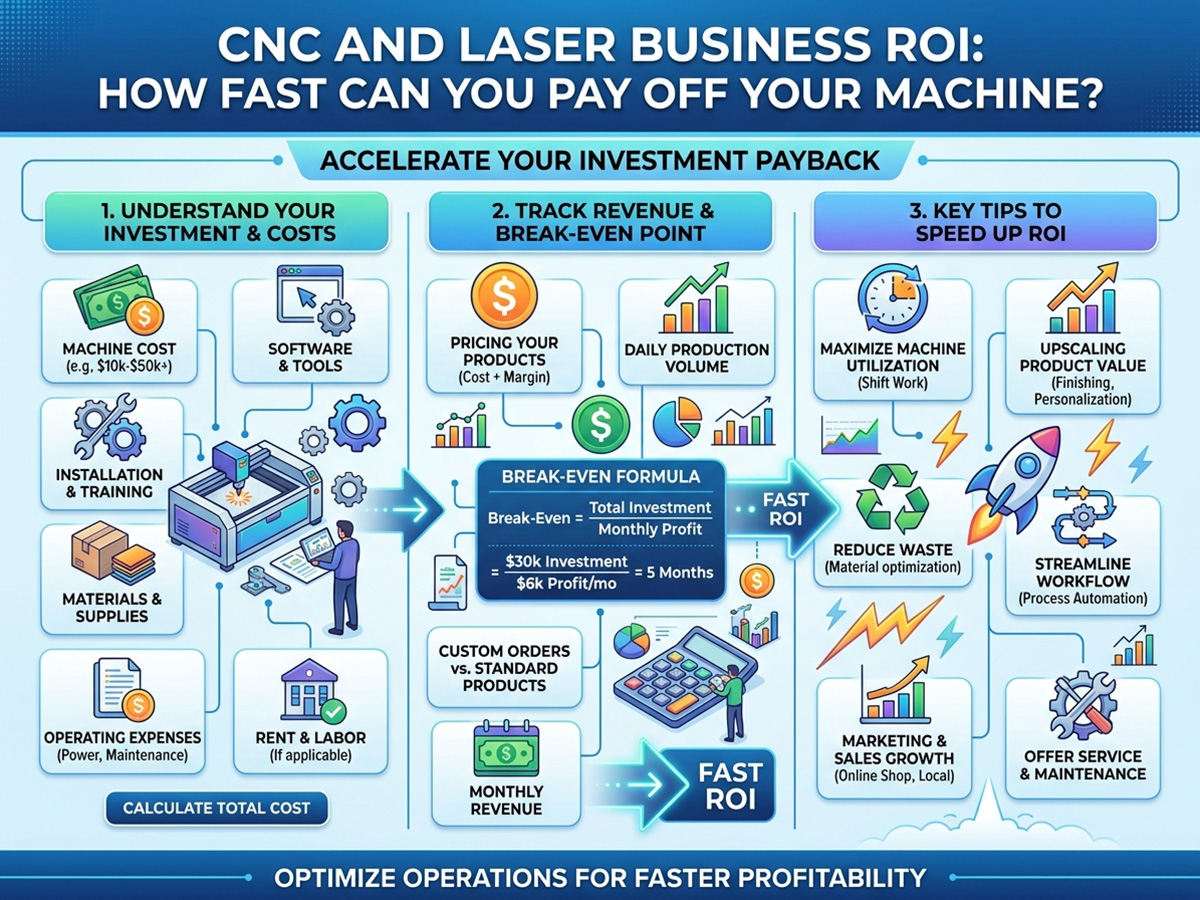
Dvočlanska mizarska delavnica investira $25,000 v mini CNC usmerjevalnik za mala podjetja uporaba, vključno s programsko opremo. Stroj omogoča rezanje znakov, graviranje plošč in izdelavo delov po meri. Mesečni obratovalni stroški znašajo približno $400 (elektrika, orodje, vzdrževanje). Pri povprečno 20 opravilih na teden $150 na delovno mesto, mesečni bruto prihodek doseže $12,000. Po odštevanju $3.000 v materialih in $400 obratovalnih stroškov, mesečni neto prispevek je $8600. Stroj se izplača v manj kot 3 mesecih.
Scenarij 2: Zagon laserskega graviranja
Podjetnik, ki dela od doma, kupi $5, 000 CO2 Stroj za lasersko graviranje in prodaja personalizirana darila na Etsyju. Mesečni stroški znašajo približno $300 (materiali, elektrika, stroški platforme). Prodaja 100 prilagojenih artiklov na mesec po povprečni ceni $25 vsak ustvari $2.500 prihodkov. Čisti mesečni dobiček približno $2,200 pomeni, da se stroj povrne v približno dveh mesecih in pol. Upravljavci v skupnostih LightBurn Forum in Reddit r/lasercutting potrjujejo, da osredotočeni sezonski prodajalci pogosto povrnejo stroške še hitreje med prazniki.
Scenarij 3: Kovinska predelovalnica z vlaknenim laserjem
Delavnica, ki trenutno odda v zunanje izvajanje stroške laserskega rezanja $7500 dolarjev na mesec za zunanje storitve. Vlagajo $80,000 v stroj za lasersko rezanjeMesečni obratovalni stroški (plin, elektrika, potrošni material, en operater) znašajo približno $3.000. Z uvedbo rezanja v delavnico prihranimo $4500 dolarjev neto na mesec. Naložba se povrne v približno 18 mesecih, vsak naslednji mesec pa neposredno poveča dobiček.
Kako izračunati lastno dobo odplačevanja
S tem postopnim okvirom ocenite časovni okvir odplačila vašega stroja.
1. korak: Seštejte svoje investicijske stroške
• Nakupna cena stroja (vključno s poštnino, davki in uvoznimi dajatvami)
• Montaža, električna priprava in nastavitev prezračevanja
• Licence za programsko opremo in usposabljanje
• Dodatki (rotacijski priključki, izpušni sistemi, kompleti orodij)
2. korak: Ocenite mesečne obratovalne stroške
• Elektrika (500 do 1,500W stroji stanejo približno $20 za $75/mesec po tipičnih cenah)
• Potrošni material (nastavki, leče, šobe, laserske cevi)
• Materiali za vaše glavne linije izdelkov
• Vzdrževanje in preventivno servisiranje
3. korak: Projektni mesečni prihodek
• Raziščite tržne cene za vaše ciljne izdelke (znaki po meri, gravirana darila, izrezani deli)
• Ocenite realno proizvodno zmogljivost na izmeno
• Uporabite konzervativne številke namesto napovedi najboljšega možnega primera
4. korak: Uporabite formulo za vračilo
Doba vračila (meseci) = Skupna naložba / (Mesečni prihodek - Mesečni obratovalni stroški)
Če tudi vaša konzervativna ocena kaže, da se naložba povrne v 24 mesecih, je tveganje naložbe obvladljivo. Če deluje le v najboljšem primeru, pred zavezo ponovno pretehtajte velikost stroja ali ciljni trg.
Pogoste napake pri donosnosti naložbe, ki se jim je treba izogniti
Izkušeni lastniki podjetij s CNC in laserskimi stroji na Redditu, Signs101 in WOODWEB-u pogosto opozarjajo na te napake, ki se jim je mogoče izogniti in ki uničujejo dobičkonosnost. Izogibanje tem pastem je ključnega pomena, ne glede na to, ali raziskujete Stroški in prednosti laserskega graverja za zagonsko podjetje ali skaliranje uveljavljenega poslovanja.
✓ Nakup $100,000 stroj, ko a $20,000 enot pokriva 90% vaše delovne obremenitve
✓ Varčevanje s programsko opremo CAM/CAD in omejevanje dejanske zmogljivosti strojne opreme
✓ Oblikovanje cen izdelkov zgolj na podlagi stroškov materiala namesto upoštevanja stroškov strojnega časa, dela in režijskih stroškov
✓ Neupoštevanje vzdrževalnih načrtov in nato soočanje s katastrofalnimi okvarami vretena ali laserske cevi
✓ Ob predpostavki, da bo stroj ostal zaseden brez aktivnega trženja, prodajnega ozaveščanja ali spletne trgovine
✓ Izračun donosnosti naložbe z uporabo najboljše izkoriščenosti namesto realnih 60 do 70% stopnje osvetlitve s snopom
✓ Neupoštevanje obdobja krivulje učenja, ko je produktivnost nizka in so odpadki materiala visoki
Kateri CNC ali laserski stroj ponuja najhitrejšo donosnost naložbe?
Najhitrejša povrnitev naložbe je odvisna od vašega poslovnega modela, ne samo od stroja. Vendar pa nekatere kategorije dosledno zagotavljajo hitrejše donose zaradi nižjih vstopnih stroškov, širokega povpraševanja na trgu in visokih marž na enoto.
| Poslovni model | Najboljše prileganje stroju | Zakaj je donosnost naložbe najhitrejša |
|---|---|---|
| Personalizirana darila in dekoracija (Etsy, Shopify, tržnice) | CO2 laserski graver (2 tisoč dolarjev - $8K) | Nizki vstopni stroški, visoke marže (50 - 70%), močno sezonsko povpraševanje |
| Izdelava napisov po meri in obdelava lesa | CNC rezkalni stroj (5 tisoč dolarjev - $30K) | Ponavljajoča se naročila, prihranki pri delu, dokazano povpraševanje v vseh panogah |
| Izdelava kovin (v delavnici ali v podjetju) | Laserski rezalnik z vlakni (30 $-) $200K) | Odpravlja stroške zunanjega izvajanja, obvladuje debele kovine, omogoča hitro izdelavo prototipov |
| Proizvodnja omar in pohištva | Industrijski CNC usmerjevalnik (20 $- $80K) | Nadomešča več zaposlenih, gnezdeno rezanje zmanjšuje odpadke |
| Rezanje mešanih materialov (kovina + nekovina) | Hibridni laserski rezalnik (10 $- $40K) | En sam stroj pokriva različna opravila in zmanjšuje odvečnost opreme |
Za podjetnike, ki raziskujejo, kako začnite svoje podjetje z laserskim rezalnikom, začenši z vsestranskim strojem srednjega razreda in preizkušeno linijo izdelkov, zmanjšuje tveganje, hkrati pa maksimizira zgodnji denarni tok.
Maksimiranje dolgoročne dobičkonosnosti po odplačilu naložbe
Ko se vaš stroj enkrat izplača, se vsak naslednji evro prihodka bolj neposredno usmeri v dobiček. Najuspešnejša podjetja s CNC in laserskimi stroji uporabljajo te strategije za povečanje donosnosti skozi čas.
• Diverzifikacija linij izdelkov: Dodajte dopolnilne ponudbe. Trgovina z napisi s CNC usmerjevalnikom lahko doda lasersko gravirane plošče. Podjetje za lasersko graviranje se lahko razširi na storitve rezanja.
• Serijska proizvodnja: Združite podobna opravila, da skrajšate čas priprave in povečate neprekinjene ure rezanja. Preklapljanje med materiali in programi zmanjšuje proizvodno zmogljivost.
• Avtomatizirajte, kjer je to mogoče: Nakladalniki materiala, avtomatski menjalniki orodij in programska oprema za sledenje opravilom zmanjšujejo ročne posege in povečujejo prepustnost na operaterja.
• Strateško reinvestirajte: Dobiček od prvega stroja uporabite za financiranje drugega. Večina lastnikov trgovin priporoča, da pred povečanjem obsega preverite dobičkonosnost in ne kupujete tretjega stroja, dokler prva dva ne začneta očitno prinašati dobička.
• Prizadevajte si za pogodbe z visoko vrednostjo: Korporativna blagovna znamka, arhitekturne instalacije in industrijski deli imajo večje vrednosti naročil in dolgoročnejše odnose kot enkratni potrošniški izdelki.
Pogosto zastavljena vprašanja
Koliko časa traja, da se CNC usmerjevalnik izplača?
Večina CNC rezkarjev se izplača v 6 do 18 mesecih, odvisno od uporabe in cenovne strategije. Namizni modeli pod $10,000 pogosto doseže točko preloma v manj kot 6 mesecih. Industrijski rezkalniki polne velikosti običajno povrnejo stroške v 12 do 18 mesecih pri konstantnih obsegih proizvodnje.
Je posel z laserskim graviranjem dejansko donosen?
Podjetja za lasersko graviranje rutinsko dosegajo dobičkonosne marže med 50% in 70% na personaliziranih izdelkih. Operaterji, ki se osredotočajo na niše z velikim povpraševanjem, kot so korporativne nagrade, poročni spominki in dekoracija doma po meri, poročajo o največjih donosih z nizkimi stroški materiala.
Kakšna je dobra stopnja izkoriščenosti za CNC ali laserski stroj?
Stopnja izkoriščenosti 60% do 80% velja za zdravo za večino delavnic. To upošteva čas nastavitve, vzdrževanje in ravnanje z materialom. V proizvodnji velikih količin je mogoče doseči več kot 85 %, vendar zahteva strogo optimizacijo delovnega procesa.
Ali lahko začnem CNC podjetje s krajšim delovnim časom in še vedno vidim donosnost naložbe?
Podjetja s CNC-jem s krajšim delovnim časom so rentabilna, čeprav se dobe vračila sorazmerno podaljšujejo. Stroj, ki deluje 15 do 20 ur na teden namesto 40, lahko potrebuje 12 do 24 mesecev, da doseže točko preloma, namesto 6 do 12. Ključno je ohranjanje cenovne discipline in ciljanje na dobičkonosne kategorije izdelkov.
Katere skrite stroške naj vključim v izračun donosnosti naložbe?
Upoštevajte elektriko, potrošno orodje (svežilne svedre, leče, šobe), naročnine na programsko opremo, sisteme za zbiranje ali odsesavanje prahu, stisnjen zrak ali pomožni plin in dele za preventivno vzdrževanje. Če zanemarimo te stroške, se napihnejo predvideni donosi in se v resničnem svetu razočarajo rezultati.
Ali naj CNC stroj financiram ali plačam z gotovino?
Financiranje ohranja obratni kapital za materiale, trženje in poslovanje. Mnogi lastniki trgovin ugotavljajo, da so mesečne najemnine nižje od njihovih prejšnjih računov za zunanje izvajanje storitev, zaradi česar je denarni tok zaradi prehoda pozitiven že od prvega meseca. Davčne olajšave za opremo lahko dodatno izravnajo skupne stroške.
Končna thoughts
Matematika donosnosti naložbe v CNC in laserske stroje je preprosta: seštejte stroške, predvidite konzervativne prihodke in jih razdelite. Odtenek je v izvedbi. Lastniki, ki svoje stroje obravnavajo kot sredstva, ki ustvarjajo prihodek, in ne kot del delavniške opreme, si naložbo vedno hitreje povrnejo in zgradijo bolj odporna podjetja. Ne glede na to, ali primerjate Stroški laserskega graverja in potencial zaslužka Pri prvem nakupu ali ocenjevanju nadgradnje zmogljivosti je treba vašo odločitev utemeljiti na realističnem finančnem modeliranju, kar odpravlja ugibanja in vaše poslovanje postavi v položaj dolgoročne dobičkonosnosti.